Smith Promotes IRS Free File Program
Applauds End of Biden Admin’s Unauthorized Direct File Pilot Program
Today, Congressman Adrian Smith (NE-03), a senior member of the House Ways and Means Committee, questioned Internal Revenue Service (IRS) Chief Executive Officer Frank Bisignano about his efforts to improve the IRS Free File program.
During the hearing, Smith highlighted his efforts to end the Biden Administration’s burdensome Direct File program which was launched without proper Congressional approval.
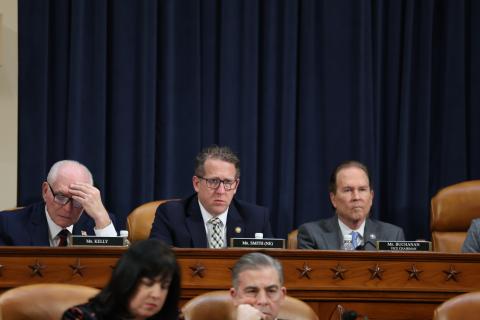
Click the image above to watch a video of Congressman Smith's questioning
Click here to download audio
Click here to download video
On Ending Biden’s Burdensome Direct File Program:
Smith: And it makes me think about various federal workers who work hard to do the right thing, and the bureaucracy stands in the way. I think we should pay very close attention to hearing the messages that can oftentimes come from a federal worker who is suggesting a better way of doing things.
And that's why a categorical, call it an earmark of $80 billion, that would have added more employees, that would actually squeeze a lot of dollars, sometimes even without authorization, out of the middle class, with more audits. At the same time, when I think there's common agreement that we want taxpayers to have better access to better service, and when the bureaucracy stands in the way, we should be concerned.
I'm glad to have led the effort to put an end to the Direct File Pilot Program, supposed pilot program. This program was launched without clear statutory authorization. It overran projected costs and created a concerning conflict of interest by placing the IRS in the role of both tax preparer and tax enforcer.
We saw troubling indicators that the program was not serving taxpayers as intended. For example, individuals who use Direct File receive refunds that average roughly $1,600 below the national average. We've even seen recently, some Democrats acknowledge that the Biden Administration launched Direct File without the authorization of Congress that we know was required. I was proud to lead the effort to put an end to the pilot program, and I certainly appreciate your team's work in helping bring that chapter to a close.
On Utilizing the Free File Program:
Smith: Now, moving forward, we know that to Free File, for example, is an option for the American people. That is an important distinction to make between Free File and the Direct File. A previous Direct File, as inefficient as it was. But looking at Free File, I'm wondering if you can reflect a little bit how you view taxpayers having access to the Free File program and what changes to various options you might suggest or are pursuing to expand eligibility or make these Free File programs easier for taxpayers.
Bisignano: Free File is used, it's well received. I think what I'm hearing across the board I asked the question this morning to the National Taxpayer Advocate, who actually, you know, publishes a report at tax season. And asked a very direct question, "How do you characterize many of the elements working right now?"
And the National Taxpayer Advocate, who does not report to me, said it's going smoothly across the board. The outliers will obviously show up in other people's offices, and that's why we're here to help them through it. And when I talked to the head of taxpayer services, he talked about the Free File, its utilization, its use, and more importantly, the amount of trust the American public has in the IRS and their ability to do the right thing for the American public.
We may talk about difficult situations, but by and large, the American public does trust IRS in their matters, by and large and Free File and the elimination of Direct File fall in that category, sir.
Smith: Well, thank you. I think, you know, millions of Americans would concur that your work is important, that collecting what is due is important, and that with today's technology we should be able to see a future where taxpayers have more ease in paying their taxes across the board.